
Introduction: Understanding Your Options When Your Credit Score Says No
Walking into a bank with a 580 credit score feels like wearing a scarlet letter. The loan officer glances at your application, types something into their computer, and within minutes delivers the dreaded news: “Unfortunately, we’re unable to approve your application at this time.” You’re not alone—approximately 16% of Americans have credit scores below 600, and another 18% fall into the “subprime” category with scores between 580-669.
But here’s what traditional banks don’t tell you: bad credit doesn’t mean no options. The American lending landscape has evolved dramatically over the past decade, with specialized lenders, online platforms, credit unions, and alternative financing options specifically designed to serve borrowers who’ve experienced financial setbacks. The question isn’t whether you can get a loan with bad credit—it’s which type of loan makes the most sense for your situation and how to avoid predatory lenders while accessing legitimate credit.
The U.S. bad credit loan market represents over $40 billion in annual lending, serving millions of Americans who need access to credit for emergencies, debt consolidation, home repairs, medical bills, or rebuilding their financial lives. Understanding how this market works, what lenders actually evaluate beyond credit scores, and which borrowing options offer fair terms versus dangerous traps can mean the difference between financial recovery and a devastating debt spiral.
This comprehensive 2,000-word guide reveals everything you need to know about bad credit loans in America: the borrowing options available to you right now, what lenders really look for when evaluating applications, how to maximize your approval odds, realistic interest rates and costs to expect, red flags signaling predatory lending, and proven strategies to use these loans as stepping stones toward better credit rather than anchors dragging you deeper into debt.
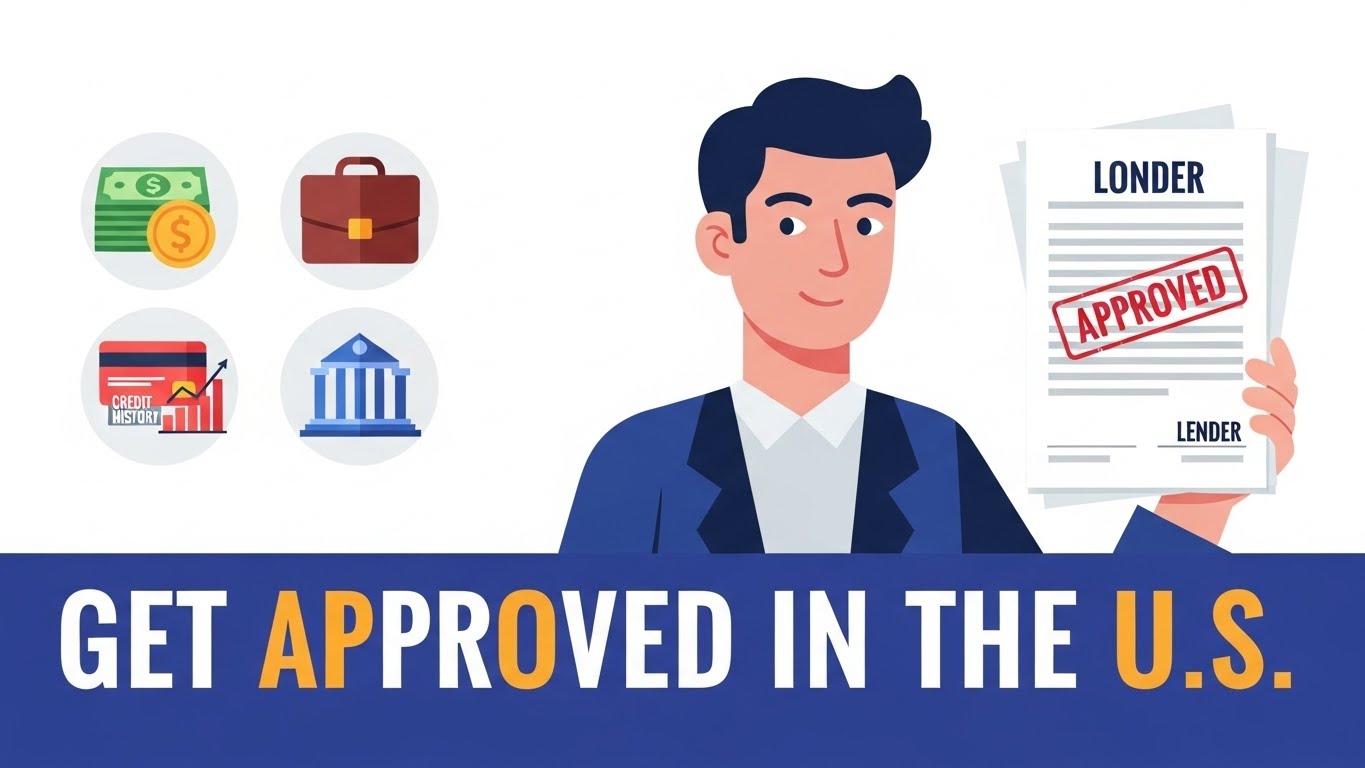
What U.S. Lenders Actually Evaluate: Beyond Your Credit Score
Most people believe credit scores determine everything. While they’re important, modern lenders—especially those specializing in bad credit borrowers—use sophisticated multi-factor underwriting that considers your complete financial picture.
The Five Cs of Credit (What Lenders Really Examine)
1. Credit History
What they review:
- Payment history (most important factor—35% of FICO score)
- Credit utilization (amounts owed vs. credit limits)
- Length of credit history
- Types of credit used (installment loans, credit cards, mortgages)
- Recent credit inquiries
What they’re looking for:
- Patterns, not just numbers: One medical bankruptcy is viewed differently than chronic missed payments
- Recent improvements: 12 months of on-time payments matter more than a 5-year-old collection
- Context: Why did your credit suffer? Medical emergency, divorce, job loss, or financial irresponsibility?
Bad credit lender perspective: “A 620 score with improving payment history beats a 650 with recent delinquencies. We care about trajectory.”
2. Capacity (Income and Debt-to-Income Ratio)
What they calculate:
- Gross monthly income from all sources
- Existing monthly debt obligations (rent/mortgage, car loans, credit cards, student loans)
- Debt-to-Income (DTI) ratio: Total monthly debts ÷ Gross monthly income
Example calculation:
- Monthly income: $4,000
- Existing debts: $1,400 (rent $900, car $300, credit cards $200)
- DTI ratio: $1,400 ÷ $4,000 = 35%
Lender preferences:
- Ideal: DTI below 36%
- Acceptable: DTI 36-43%
- Difficult: DTI 43-50%
- Usually declined: DTI over 50%
How this helps bad credit borrowers: High income with bad credit often gets approved when low income with good credit gets rejected. Lenders care about ability to repay.
Income sources lenders count:
- Employment wages or salary
- Self-employment income (with tax returns)
- Social Security or disability benefits
- Pension or retirement income
- Alimony or child support (if documented)
- Investment income
- Side gig or freelance work
- Unemployment benefits (some lenders)
3. Capital (Assets and Down Payment)
What they consider:
- Savings and checking account balances
- Investment accounts (stocks, bonds, retirement)
- Property ownership (home equity)
- Vehicle ownership (paid-off cars)
- Other valuable assets
Why it matters:
- Shows financial stability and responsibility
- Provides cushion for missed payments
- Can be used as collateral for secured loans
- Demonstrates ability to save
Real example: Borrower with 560 credit score but $15,000 in savings gets approved when borrower with 620 score and $200 in bank gets denied. Assets demonstrate financial discipline.
4. Collateral (Security for the Loan)
What can be used as collateral:
- Vehicle title (auto title loans, though often predatory)
- Home equity (home equity loans, HELOCs)
- Savings account or CD (secured personal loans)
- Investment accounts
- Valuable personal property (pawn loans)
How collateral changes lending decisions:
- Unsecured loan at 560 credit score: Likely rejection or 35% APR
- Secured loan at 560 credit score: Approval at 12-18% APR
Trade-off: Better rates and approval odds vs. risk of losing asset if you default
5. Character (Stability and Trustworthiness)
What they evaluate:
- Employment stability (time at current job)
- Residential stability (time at current address)
- Banking relationship history
- Professional licenses or certifications
- Personal references
- Explanation of credit problems
Underwriting questions assessing character:
- “How long have you been at your current job?” (Stability)
- “What caused your credit problems?” (Responsibility vs. circumstances)
- “How do you plan to repay this loan?” (Thoughtfulness)
- “Have you taken steps to improve your financial situation?” (Proactivity)
Real impact: Written explanation of bankruptcy due to medical emergency vs. no explanation significantly affects approval odds.
Alternative Underwriting: Non-Traditional Data Points
Modern lenders, especially online platforms, increasingly use alternative data to evaluate creditworthiness:
Bank account analysis:
- Consistent deposits (income stability)
- Positive balance patterns
- Overdraft frequency
- Regular bill payments through account
Utility and rent payment history:
- On-time utility payments (not traditionally on credit reports)
- Rent payment history
- Cell phone payment patterns
Education and employment data:
- College degree (correlates with default rates)
- Professional certifications
- Industry of employment
- Income growth trajectory
Digital footprint:
- Social media presence (some lenders)
- Online shopping behavior
- Digital payment history (Venmo, PayPal)
Example: Upstart, a major online lender, considers education, field of study, and job history, often approving applicants with limited credit history who traditional lenders reject.
What Matters Most When You Have Bad Credit
Priority ranking for bad credit applicants:
- Stable income (45% importance): Can you afford the payment?
- Recent payment history (25% importance): Are you improving?
- Debt-to-income ratio (15% importance): Is payment reasonable for your income?
- Employment stability (10% importance): Will income continue?
- Actual credit score (5% importance): Less important than you think for specialized lenders
Key insight: A borrower with 580 credit score, stable job of 5 years, $50,000 income, and improving payment history beats a borrower with 650 credit score, new job, $35,000 income, and recent missed payments.
Smart Bad Credit Loan Options in the U.S.
Not all bad credit loans are created equal. Here are legitimate options ranked from most to least favorable:
Tier 1: Best Options (Lowest Cost, Most Legitimate)
1. Federal Credit Union Payday Alternative Loans (PALs)
What they are: Small-dollar loans specifically designed as alternatives to predatory payday loans.
Eligibility: Must be credit union member for 1+ months
Loan amounts:
- PAL I: $200-$1,000
- PAL II: $200-$2,000
Interest rates: Maximum 28% APR (legally capped)
Terms: 1-6 months (PAL I) or 1-12 months (PAL II)
Application fee: Maximum $20
Why they’re best:
- Dramatically cheaper than payday loans (28% vs. 400% APR)
- Credit union membership provides financial education
- Reports to credit bureaus (builds credit)
- No rollovers or debt traps
How to get one:
- Join a federal credit union (often just $5-25)
- Wait 30 days (membership requirement)
- Apply for PAL
- Receive decision within 24-48 hours
Major credit unions offering PALs:
- Navy Federal Credit Union
- Alliant Credit Union
- Bethpage Federal Credit Union
- BECU (Boeing Employees Credit Union)
- Local community credit unions
2. Credit Union Personal Loans
What they are: Traditional installment loans from member-owned financial institutions.
Credit requirements: More flexible than banks; many consider scores of 580-620+
Loan amounts: $1,000-$50,000
Interest rates: 8-18% APR for bad credit (better than online lenders)
Terms: 1-7 years
Why they’re smart:
- Not-for-profit = better rates and terms
- Personal service and flexibility
- Consider whole financial picture
- Financial counseling often included
- Report to credit bureaus
Best credit unions for bad credit:
- Navy Federal: Serves military members and families; flexible underwriting
- PenFed: Open to anyone; strong bad credit programs
- Alliant: Anyone can join; competitive rates
- Digital Federal Credit Union (DCU): Innovative credit-builder products
3. Online Personal Loan Lenders Specializing in Bad Credit
Top legitimate platforms:
Upstart (Best for limited credit history):
- Minimum credit score: 300 (considers alternative data)
- Loan amounts: $1,000-$50,000
- APR: 7.8%-35.99%
- Unique approach: AI evaluates education, job, income trajectory
- Best for: Young borrowers, recent graduates with thin credit files
Avant (Best for fair-to-bad credit):
- Minimum credit score: 580
- Loan amounts: $2,000-$35,000
- APR: 9.95%-35.99%
- Fast funding: Often next business day
- Transparent fees: Origination fee up to 4.75%
LendingPoint (Best for credit rebuilding):
- Minimum credit score: 600
- Loan amounts: $2,000-$36,500
- APR: 9.99%-35.99%
- Focus: Borrowers actively improving credit
- Reports to all three credit bureaus
OneMain Financial (Best for in-person service):
- Minimum credit score: None (considers very bad credit)
- Loan amounts: $1,500-$20,000
- APR: 18%-35.99%
- 1,400+ branches nationwide
- Secured loan options available
Pros of online lenders:
- Fast application and funding (1-3 days)
- Soft credit check pre-qualification
- Transparent terms upfront
- Higher approval rates than banks
Cons:
- Higher APRs (18-36% common)
- Origination fees (1-8% of loan)
- Some share data with marketing partners
Tier 2: Acceptable Options (Moderate Cost, Use Carefully)
4. Secured Personal Loans
How they work: Borrowing against your savings account, CD, or investment account.
Typical terms:
- Loan amount: Up to 100% of collateral value
- APR: 3-12% (much lower due to security)
- Collateral remains in account but frozen until repayment
Why consider them:
- Lowest rates available for bad credit
- Guaranteed approval (you’re borrowing your own money)
- Builds credit history
- No risk of overspending
Best providers:
- Your current bank or credit union
- Navy Federal Credit Union (Share Secured Loans)
- Oportun (for small secured loans)
Example:
- Borrow $3,000 against your $3,000 CD
- Pay 5% APR instead of 30% APR
- Make on-time payments for 12 months
- Credit score improves 40-80 points
- Get your $3,000 back plus interest
5. Credit-Builder Loans
Purpose: Specifically designed to build credit, not provide immediate cash.
How they work:
- “Borrow” $500-$3,000
- Lender holds money in locked savings account
- You make monthly payments for 6-24 months
- Payments reported to credit bureaus
- When paid off, receive the money plus interest
Top providers:
- Self: $25-$150/month builds to $600-$3,000
- Credit Strong: $1,000-$5,000 loans
- MoneyLion: Credit-builder plus cash advance features
Costs: 13-16% APR (you pay interest on your own money, but it’s for credit building)
Best for: People with very bad credit who need to rebuild before accessing better loans
Tier 3: Use Only If Necessary (Higher Cost)
6. Co-Signed Personal Loans
How they work: Friend or family member with good credit co-signs, taking on full responsibility if you default.
Benefits:
- Access to better rates (based on co-signer’s credit)
- Higher loan amounts
- Approval when you’d otherwise be rejected
Risks:
- Co-signer’s credit damaged if you miss payments
- Strains relationships
- Co-signer legally obligated to pay
Best practices:
- Only ask someone you trust completely
- Show them your budget proving you can pay
- Set up automatic payments
- Maintain communication about loan status
Lenders accepting co-signers:
- Wells Fargo
- Discover Personal Loans
- Most credit unions
- Some online lenders
Tier 4: Avoid Unless Absolute Emergency
7. Auto Title Loans
What they are: Borrowing against your paid-off vehicle’s title.
Terms:
- Loan amounts: $100-$10,000 (typically 25-50% of car value)
- APR: 100-300% (extremely high)
- Term: 30 days, with rollovers
Why they’re dangerous:
- If you can’t repay, lose your car
- Debt spirals from rollovers
- Predatory fee structures
- 20% of borrowers lose their vehicles
When to consider: Only if facing eviction or utilities shutoff AND you have solid repayment plan within 30-60 days
Better alternatives: Almost anything else, including borrowing from family
8. Payday Loans
Terms:
- Loan amounts: $100-$1,000
- Fees: $10-30 per $100 borrowed
- APR equivalent: 400%+ when annualized
- Term: 2 weeks (until next paycheck)
Why to avoid:
- Debt trap: 80% of payday loans are rolled over or renewed
- Average borrower takes 10 loans per year
- $375 loan becomes $520 after fees
- Doesn’t build credit
Use instead: Credit union PALs, family loans, payment plans with creditors, nonprofit assistance
Options to Skip Entirely
Avoid these completely:
- Advance fee loan scams (pay upfront for “guaranteed approval”)
- No-credit-check loans from unlicensed lenders
- Loans requiring access to your bank account
- Anything with APR over 100%
- Lenders operating without state licenses
How to Maximize Your Approval Odds
Follow this strategic approach to get approved with bad credit:
Step 1: Check and Understand Your Credit (Week 1)
Actions:
- Get free credit reports from AnnualCreditReport.com
- Check FICO scores through bank or Credit Karma
- Review reports for errors and dispute inaccuracies
- Identify main factors hurting your score
Common fixable errors:
- Accounts that aren’t yours
- Incorrect late payments
- Accounts showing open that are closed
- Incorrect balances or credit limits
Disputing errors:
- File disputes online with each credit bureau
- Provide supporting documentation
- Bureaus must investigate within 30 days
- Removing errors can improve score 20-50+ points
Step 2: Improve Your Approval Factors (Weeks 1-4)
Quick wins:
- Pay down credit card balances below 30% utilization
- Set up automatic payments on all accounts
- Don’t apply for new credit (hard inquiries hurt)
- Become authorized user on family member’s good account
- Update income information with existing creditors
30-day improvement plan:
- Week 1: Dispute credit report errors
- Week 2: Pay down highest-utilization credit cards
- Week 3: Set up all automatic payments
- Week 4: Gather income documentation
Expected impact: 15-40 point score increase possible in 30 days
Step 3: Calculate Realistic Loan Needs
Determine:
- Exact amount needed (don’t round up)
- True purpose (lenders ask)
- Realistic monthly payment you can afford
- Preferred loan term
Budget test:
- Current monthly income: $______
- Current monthly expenses: $______
- Available for loan payment: $______
- Maximum affordable payment: 15-20% of take-home income
Example:
- Take-home income: $3,000/month
- Maximum payment: $450-600/month
- At 24% APR, can afford: $5,000-7,000 loan (3-year term)
Step 4: Compare Multiple Lenders
Pre-qualify with 5-7 lenders (soft credit check, no score impact):
Comparison checklist:
- APR (annual percentage rate)
- Origination fees
- Monthly payment amount
- Total repayment amount
- Funding speed
- Customer reviews
Use comparison tools:
- NerdWallet loan comparison
- Bankrate personal loan comparison
- Credible marketplace
- LendingTree (connects to multiple lenders)
Rate shopping window: Apply with multiple lenders within 14-45 days—counts as single credit inquiry
Step 5: Strengthen Your Application
Documentation to prepare:
- Government-issued ID
- Proof of income (2 recent pay stubs or tax returns)
- Bank statements (2-3 months)
- Proof of address (utility bill, lease)
- Employment verification contact
Application tips:
- List all income sources (side gigs, benefits, etc.)
- Choose longer loan terms for lower payments
- Provide explanation for credit issues if asked
- Be completely honest (lying is loan fraud)
- Apply during business hours (some verify immediately)
Strengthen with:
- Offer collateral if available
- Include co-signer if possible
- Show proof of improving credit (recent on-time payments)
- Demonstrate stable employment (2+ years same job)
Step 6: Review Offers Carefully
Before accepting:
- Calculate total cost (principal + all interest and fees)
- Verify APR matches quote
- Check for prepayment penalties
- Understand late payment fees
- Confirm payment due date
Red flags to reject:
- Terms changed from pre-qualification
- Hidden fees in fine print
- APR over 36% (unless absolute emergency)
- Pressure to sign immediately
- Unclear or evasive answers to questions
Real Talk: What to Expect With Bad Credit
Realistic expectations:
Credit Score 580-619 (Bad):
- Approval odds: 40-60% (varies by lender)
- APR range: 24-36%
- Loan amounts: $1,000-$10,000
- Best options: Credit unions, online lenders specializing in bad credit
Credit Score 620-659 (Fair):
- Approval odds: 60-75%
- APR range: 18-28%
- Loan amounts: $2,000-$20,000
- Best options: Credit unions, mainstream online lenders
Credit Score 660-699 (Fair/Approaching Good):
- Approval odds: 75-85%
- APR range: 12-22%
- Loan amounts: $5,000-$35,000
- Best options: Regional banks, credit unions, premium online lenders
Cost comparison (example: $5,000 loan, 3-year term):
- Excellent credit (750+, 8% APR): $157/month, $5,652 total ($652 interest)
- Good credit (700-749, 14% APR): $171/month, $6,156 total ($1,156 interest)
- Fair credit (640-699, 22% APR): $188/month, $6,768 total ($1,768 interest)
- Bad credit (580-639, 32% APR): $211/month, $7,596 total ($2,596 interest)
The bad credit penalty: You pay $1,944 more in interest than excellent credit borrower for same loan
Building Credit While Repaying Your Loan
Use your bad credit loan strategically to improve your score:
Months 1-6: Establish Payment History
- Set up automatic payments (never miss due date)
- Pay exactly on time every month
- Don’t skip months or pay late
- Expected impact: +20-35 points
Months 7-12: Build Momentum
- Continue perfect payment history
- Pay slightly more than minimum when possible
- Keep credit card balances low
- Don’t apply for new credit
- Expected impact: +15-30 additional points
Months 13-24: Achieve Results
- Consider refinancing if score improved 50+ points
- May qualify for better rates elsewhere
- Continue all positive behaviors
- Build emergency savings
- Expected impact: +20-40 additional points
Total improvement potential: 55-105 points over 24 months with consistent on-time payments
Conclusion: Smart Borrowing Leads to Financial Recovery
Bad credit isn’t a life sentence—it’s a temporary setback. The U.S. lending market offers legitimate options for borrowers with imperfect credit, from credit union PALs to specialized online lenders using modern underwriting that looks beyond credit scores.
Key takeaways:
- Lenders evaluate more than credit scores: Income, employment stability, debt-to-income ratio, and payment trends often matter more
- Hierarchy of options exists: Credit unions beat online lenders, which beat payday loans—choose wisely
- Preparation improves approval odds: Fixing credit errors, documenting income, and comparing lenders can save thousands
- Bad credit loans cost more: Accept this reality but minimize damage by choosing lowest rates and shortest affordable terms
- Strategic use builds credit: On-time payments on bad credit loans pave the way to good credit and better future terms
Your action plan:
- This week: Check credit reports, dispute errors, calculate realistic needs
- Next week: Pre-qualify with 5-7 lenders, compare offers
- Apply: Choose best option, review terms carefully before signing
- Ongoing: Make automatic payments, build credit, plan for refinancing when score improves
Bad credit doesn’t define your future—how you handle it does. Borrow smart, repay responsibly, and use these loans as stepping stones to financial recovery rather than anchors dragging you deeper into debt.
Related posts:
 Getting more energy from the sun: how to make better solar cells
Top 20 Universities for Scholarships in 2024
Mobile Advertising: The Next Big Thing in Digital Marketing
Getting more energy from the sun: how to make better solar cells
Top 20 Universities for Scholarships in 2024
Mobile Advertising: The Next Big Thing in Digital Marketing
 Jay Leno Says Becoming Wife Mavis’ Caretaker After Dementia Diagnosis Is ‘What Love Is’: ‘I Would Rather Be with Her’
 William & Kate Turn Up the Romance in Rare Anniversary PDA Pics (PHOTOS)
 Woman Says She No Longer Wants To Be In A Relationship With Her Child’s Father After Years Of Caring For Him Following Him Getting Sh*t In The Head!
 Rude Couple Embarrassed My Mom at a Café — but When the Door Opened, Everything Changed
 Giant hail recorded Tuesday evening in the town of! See more!