
Introduction
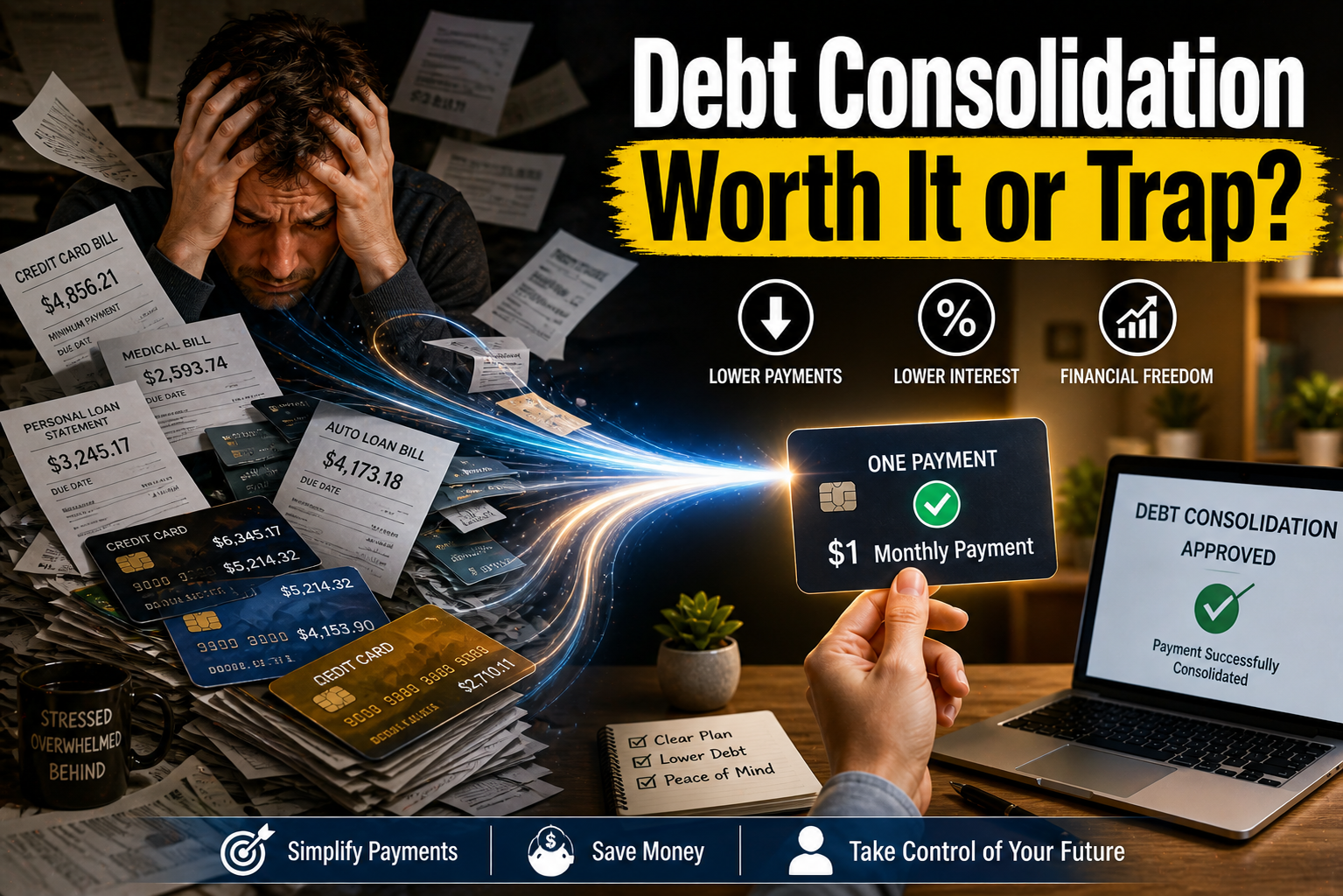
Managing multiple debts can quickly become overwhelming. Credit cards, personal loans, medical bills, and other financial obligations can pile up, each with different interest rates and due dates.
This is where debt consolidation comes in.
It promises a simpler solution—combine all your debts into one payment, often with a lower interest rate. Sounds perfect, right?
But the real question is:
Is debt consolidation actually worth it—or just another financial trap?
The answer depends on your situation. Let’s break it down in detail.
What Is Debt Consolidation?
Debt consolidation means combining multiple debts into a single loan or payment.
Instead of managing several bills, you:
-
Take a new loan (or financial product)
-
Use it to pay off existing debts
-
Focus on repaying one monthly installment
This simplifies your finances and may reduce overall interest.
How Debt Consolidation Works
There are several common ways people consolidate debt:
1. Personal Loans
You take a fixed loan and pay off all your smaller debts.
2. Balance Transfer Credit Cards
Move high-interest credit card debt to a card with lower or 0% introductory interest.
3. Home Equity Loans
Use your home’s equity to pay off debts (risky but lower interest).
4. Debt Management Plans (DMPs)
Work with a financial agency to combine and manage payments.
Each option has pros and cons depending on your financial condition.
The Biggest Advantages of Debt Consolidation
Lower Interest Rates
One of the biggest benefits is saving money on interest.
High-interest credit cards can drain your finances. Consolidating into a lower-rate loan can significantly reduce total costs.
Simpler Payments
Instead of juggling multiple due dates, you only manage one.
This reduces stress and lowers the chance of missed payments.
Fixed Repayment Plan
Many consolidation loans have fixed terms.
This means:
-
Clear timeline
-
Predictable payments
-
Better financial planning
Potential Credit Score Improvement
If used properly, debt consolidation can improve your credit score by:
-
Reducing credit utilization
-
Making payments more consistent
The Hidden Downsides You Must Know
Debt consolidation isn’t always perfect.
It Doesn’t Eliminate Debt
You still owe the same amount.
It just restructures it.
Risk of More Debt
Many people make a mistake:
They clear credit cards… then start using them again.
Now they have:
-
Consolidation loan
-
New credit card debt
That makes things worse.
Fees and Charges
Some options include:
-
Balance transfer fees
-
Loan origination fees
-
Closing costs
These can reduce your savings.
Longer Repayment Period
Lower monthly payments often mean longer repayment.
You may end up paying more interest over time.
When Debt Consolidation Is Worth It
Debt consolidation works best when:
✔ You have high-interest debt (like credit cards)
✔ You can get a lower interest rate
✔ You have a stable income
✔ You are committed to not taking new debt
✔ You want a structured repayment plan
In these cases, it can be a powerful financial tool.
When Debt Consolidation Is NOT Worth It
Avoid it if:
Your income is unstable
You keep overspending
You qualify for high interest rates
Your total debt is extremely high
You’re using it as a “quick fix”
In these situations, consolidation may delay the problem—not solve it.
Debt Consolidation vs Other Options
Debt Settlement
-
Reduces total debt
-
Damages credit score
Bankruptcy
-
Last resort
-
Major long-term impact
Snowball/Avalanche Method
-
Pay debts step by step
-
No new loan needed
Debt consolidation is often a middle-ground solution.
How to Decide If It’s Right for You
Ask yourself:
-
Can I get a lower interest rate?
-
Will I stop using credit cards?
-
Can I handle fixed monthly payments?
-
Am I disciplined with money?
If your answers are “yes,” consolidation may help.
If not, you need a different strategy.
Smart Tips Before You Consolidate
Before making a decision:
✔ Compare interest rates carefully
✔ Read all terms and conditions
✔ Check for hidden fees
✔ Avoid scams or unrealistic promises
✔ Choose trusted lenders
Small mistakes here can cost you big later.
The Real Truth About Debt Consolidation
Debt consolidation is not magic.
It doesn’t erase debt.
It doesn’t fix bad habits.
But it can:
-
Simplify your finances
-
Reduce stress
-
Save money (if used correctly)
The key is discipline.
Without it, even the best strategy can fail.
Conclusion
So, is debt consolidation worth it?
Yes—for the right person.
No—for the wrong habits.
If you’re serious about managing your debt, lowering interest, and sticking to a plan, it can be a smart financial move.
But if you’re looking for an easy escape without changing spending behavior, it won’t solve the problem.
In the end, debt consolidation is just a tool.
Its success depends entirely on how you use it.
Related posts:
 Vienna Brookshaw: The Girl Confidently Accepts Her Unique Birthmark
 Former Tennessee cop fired over workplace scandal finds unexpected new career.
 Tragic loss: 19-year-old track and field athlete dies after taking a nap
 A startling result of US immigration policy is the deportation of a 10-year-old citizen who has recovered from brain cancer surgery.
 A Digital Generational Divide: Gen Z Views the Thumbs-Up Emoji as Rude and “Passive-Aggressive”
 Legal Battle Is Started by Trump Administration’s Deportation of Venezuelan Gang Members
 Scientists Issue a Warning: Why Surgery May Be Worst on One Day of the Week
 A geopolitical flashpoint, Donald Trump makes references to sending US troops to occupy Greenland.